
| 省钱又环保!揭秘BC省商业建筑供暖系统的“降本增效”密码 | |
www.bcbay.com | 2026-10-26 10:03:54 商业文章 | 0条评论 | 查看/发表评论
|


|

|
|
|
How BC Commercial Buildings Are Upgrading Boilers and Hydronic Heating for Efficiency
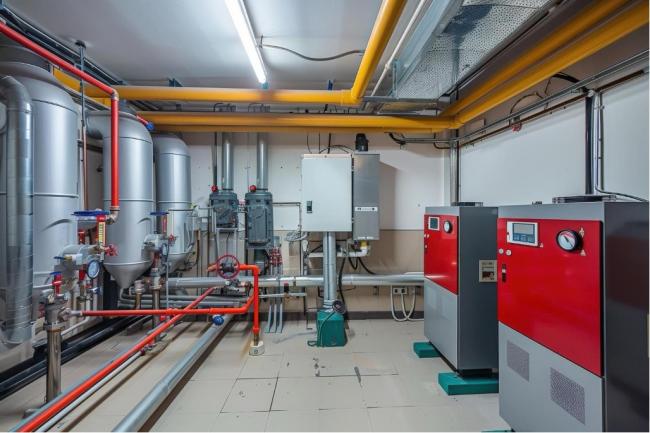
Image by shomans on Magnific In the mechanical room of many older BC apartment blocks, schools and offices sits a large boiler that has run for decades. It still makes heat. The question owners and property managers are asking now is whether it makes heat sensibly, and what it would take to get the same comfort with less gas, fewer service calls and lower emissions. Most upgrades start not with demolition but with understanding how the building uses heat. Here is how many BC buildings approach the job. Start with how the building really behaves Heating systems are usually sized for the coldest day of the year. In much of coastal BC, that day is rare. For most of the heating season the building needs only a fraction of its peak capacity, which means a big old boiler spends a lot of time firing in short bursts, shutting off, and firing again. Before anyone picks new equipment, it helps to gather some basic facts:
This shows whether the problem is the boiler, the controls, the piping or the zoning. Often it is a mix. Condensing boilers and lower water temperatures The upgrade most people think of first is replacing a standard boiler with a condensing one. Condensing boilers pull extra heat out of the exhaust gases by cooling them enough that water vapour condenses inside the heat exchanger. That recovered heat goes back into the system instead of up the flue. There is a catch. A condensing boiler only condenses when the water coming back to it is cool enough. If the building's radiators or fan coils were designed around very hot water, the return temperature may stay too high for much of the year, and the new boiler will run more like an ordinary one. That is why many retrofits pair a condensing boiler with changes to the distribution side. Common steps include:
In a mild climate like the Lower Mainland or southern Vancouver Island, outdoor reset can keep water temperatures low for long stretches, which is exactly what a condensing boiler needs. Multiple smaller boilers instead of one large one Another common approach is to replace one or two large boilers with several smaller modular units. A controller fires only as many as the load requires. On a mild October morning, one small boiler may carry the whole building. On a January cold snap, all of them run. Each boiler runs longer, steadier cycles, which is better for efficiency and wear. If one unit needs service, the others keep the building warm. Smaller boilers also fit through standard doors and stairwells, which matters in older buildings. Equipment choice also depends on the fuel available, the venting route, and the space in the room. Suppliers such as Raven Supply, a Richmond-based company that provides commercial and industrial boilers, burners, pumps and venting across BC and the Yukon, can help engineers and contractors compare options and plan retrofit site visits before anything is ordered. Do not ignore pumps, controls and venting Boilers get the attention, but the rest of the hydronic system often has as much room for improvement. Pumps. Many older systems use pumps that run at full speed all the time, whether one zone is calling for heat or twenty. Variable-speed pumps adjust to demand and use less electricity. Controls. A building automation system, or even a well-set standalone boiler controller, can schedule setbacks at night, stage multiple boilers, and alert staff to faults. Poorly tuned controls can cancel out the benefit of new equipment. Venting. Condensing boilers produce cooler, wetter exhaust that needs venting made for that purpose. Reusing an old masonry chimney is rarely an option without a proper liner or a new vent system. This should be part of the plan from the start, not a surprise during installation. Water quality. New heat exchangers can be sensitive to sludge, scale and oxygen in old system water. Flushing the system, adding filtration or dirt separators, and treating the water help protect the investment. Planning, codes and timing Commercial boiler work in BC involves permits, licensed gas fitters, and inspections under the provincial safety framework administered by Technical Safety BC. Engineers designing larger systems usually follow industry guidance from groups like ASHRAE, which publishes standards and design resources for heating and ventilation in commercial buildings. It is fair to ask the design team which ones they are working to. Timing matters too. Replacing a central boiler in the middle of winter is stressful for everyone. Most owners schedule major work for late spring or summer, which means design and equipment decisions should be made in the winter before. Lead times on larger equipment can stretch, so ordering early gives the project room to breathe. A step-by-step path works for most buildings Many owners take a staged approach: improve controls and balancing first, then replace pumps, then replace boilers when the old ones reach the end of their life. Each step lowers operating costs and makes the next one easier to size correctly. The buildings that see the best results are the ones where owners, engineers, contractors and suppliers talk early and share real data about how the building performs. A boiler is a long-term decision, and a little extra planning up front tends to pay off for many winters afterward. |
|
|
|
 0


|
| 24小时新闻排行榜 |
| 1 | 加拿大政府又发钱! 最高能领5万! 即将开放 |
| 2 | 突发: 飞北京航班万米高空放油返航! 华人心 |
| 3 | 尹大卫黯然辞职,华裔马博文拒当新党领 |
| 4 | 吃里扒外,定居美国13年 回国捞金惨遭驱赶 |
| 5 | 列治文“一片蓝” 保守党4席全垒打 2华裔胜 |
|
|
|
| 48小时新闻排行榜 |
|
|
| 最新专稿 | 更多>> |
| 专栏作者 |
| 1 | 雨生 | 2 | Lily Li | 3 | 正月十五 |
| 4 | 心宇 | 5 | 秋枫 | 6 | 上官天乙 |
| 7 | 荷莲耦园夏 | 8 | 郭歌华 | 9 | 温暖 |
| 10 | 木木 | 11 | 张酒阁 | 12 | 卡宾 |
|
|
|||||
| 热门专题 |
| 1 | BC省选 | 2 | 大温市选 | 3 | 美加贸易战 |
| 4 | 卡尼 | 5 | 川普 | 6 | 伊朗战争 |
| 7 | 乌克兰战争 | 8 | 世界杯 | 9 | 博励治 |
|
|
|||||

|
