
| 40岁后力量训练:温哥华精英为何偏爱私人教练 | |
www.bcbay.com | 2026-09-27 14:15:57 商业文章 | 0条评论 | 查看/发表评论
|


|

|
|
|
Strength Training After 40: Why Vancouver Professionals Are Hiring Personal Trainers
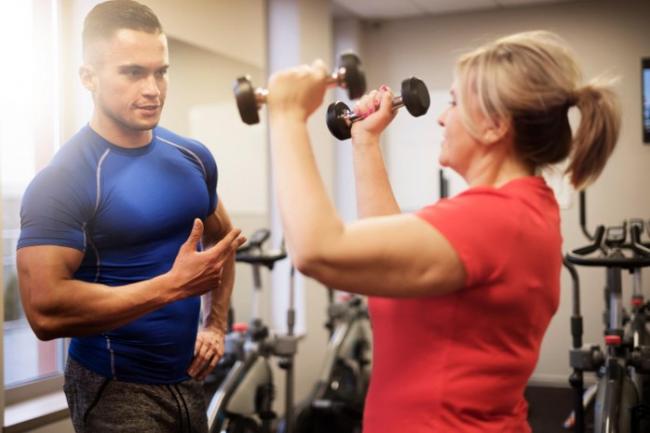
Image by gpointstudio on Magnific Somewhere in the early forties, the body stops responding to casual physical activity in the way it used to. The weekend hike that kept weight stable in the mid-thirties starts producing different results. The metabolism changes in ways that are noticeable in body composition even when diet and activity level have not changed. Muscle mass begins to decline at a rate of roughly one to two percent per year from the mid-thirties without deliberate countermeasures, and the compounding effect of that decline over a decade without intervention becomes visible in strength, energy levels, injury frequency and quality of daily movement. The Vancouver professionals who are hiring personal trainers in their forties are not doing so primarily for motivation. They are doing so because the physiological changes that arrive in this decade require a more deliberate approach than what produced results in their thirties, and most people do not have the time to develop that expertise independently. What changes after 40 and why it matters The dominant physiological shift after 40 is the accelerating loss of type II muscle fibres, the fast-twitch muscle cells responsible for power, strength and metabolic rate. Aerobic exercise does not adequately stimulate type II fibres. Resistance training that is specifically designed to challenge those fibres, using appropriate loads and progression, is the primary tool for maintaining them. The second significant change is in hormonal environment. Testosterone decline in men and oestrogen decline in women both affect the body's capacity for muscle protein synthesis and the rate at which strength responds to training stimulus. This does not mean that strength gains become impossible after 40. It means that the training stimulus required to produce them needs to be more precisely calibrated to produce results in less favourable hormonal conditions. What the ACSM recommends for adults 40 and over The American College of Sports Medicine (ACSM) sets the evidence-based guidelines for physical activity and health in adults. Their recommendations for adults 40 and over include resistance training two to three days per week using major muscle groups, at a load that produces fatigue within the target repetition range, and that is progressively increased as adaptation occurs. They also emphasise the importance of flexibility, balance and functional movement training that supports everyday activity and reduces fall risk. These recommendations reflect the research consensus that cardiovascular exercise alone, without resistance training, is insufficient to address the muscle loss and metabolic changes that characterise this decade. For busy professionals whose existing exercise is primarily aerobic, adding well-structured resistance training is the highest-return addition to an activity programme. The time efficiency argument for professional guidance A Vancouver professional in their forties who is already managing a full work schedule, family commitments and the cognitive demands of a demanding career does not have the time to develop a comprehensive understanding of progressive resistance training methodology through trial and error. The trial-and-error approach that produces results for someone with twenty hours a week to spend in the gym and twenty years of training experience produces injuries and plateaus for someone who has five hours a week and is starting from limited experience. From what Ted Loo Fitness has seen across twenty-plus years of training Vancouver clients, the specific value a personal trainer delivers to someone in their forties is not motivation or presence. It is programme design that matches the individual's recovery capacity, goal and physical history, and ongoing adjustment based on response. A forty-five-year-old with a prior knee injury needs a programme that is different from the one used for a twenty-eight-year-old with no injury history, even if their goals are identical. Getting that specificity right from the beginning is what separates training that produces results from training that produces injuries. Recovery and why it changes the programme structure The most significant practical difference between training in the twenties and training in the forties is recovery time. The same training volume that produces adaptation with forty-eight hours of recovery in a younger person may require seventy-two to ninety-six hours in someone over forty, particularly if sleep quality has declined. A programme that does not account for this difference will produce cumulative fatigue rather than adaptation, which in practical terms means stagnation or injury. An experienced trainer working with a client in their forties structures the programme specifically around recovery management: the volume and intensity that can be sustained without accumulating fatigue beyond the individual's recovery capacity, and the distribution of hard days and easy days that allows the training stimulus to actually produce adaptation. What to prioritise in a programme for this decade The most valuable elements of a strength programme for someone in their forties are the foundational compound movements: the squat pattern, the hip hinge, the push, the pull and the carry. These movements train the major muscle groups that matter most for metabolic health, injury prevention and functional longevity. They are also the movements that degrade most visibly without deliberate training through this decade. Accessory work for specific goals, aesthetic or functional, builds on this foundation. But for most people, the priority order matters: the foundational patterns first, with appropriate load and progression, produce better outcomes than a programme structured primarily around isolation exercises or cardio supplemented with occasional resistance work. The long view The evidence on what physical function looks like at sixty and seventy is strongly influenced by what people do in their forties. The muscle mass maintained through this decade, the movement patterns reinforced through deliberate practice, and the habits of structured physical activity established before decline becomes more difficult to reverse are among the most durable investments available to anyone in this decade of life. The Vancouver professionals who hire a trainer in their forties are not making a short-term decision. They are making a decision about what their sixties will look like. |
|
|
|
 0
| 分享到: |
|


|
实用资讯 |

|
|
|
|
|
|

|
| 24小时新闻排行榜 |
| 1 | 网友吐槽:饭店像抢钱 加拿大经济烂成了啥 |
| 2 | 好消息!千禧线延长地铁轨道100%铺完 |
| 3 | 曝印裔司机撞死疑似华裔女子! 涉酒驾高速逆 |
| 4 | 震惊: 中国留美博士枪杀华裔教授, 竟被判无 |
| 5 | 加美召回13万台中国知名品牌冰箱 已致一人 |
|
|
|
| 48小时新闻排行榜 |
|
|
| 最新专稿 | 更多>> |
| 专栏作者 |
| 1 | 雨生 | 2 | Lily Li | 3 | 正月十五 |
| 4 | 心宇 | 5 | 秋枫 | 6 | 上官天乙 |
| 7 | 荷莲耦园夏 | 8 | 郭歌华 | 9 | 温暖 |
| 10 | 木木 | 11 | 张酒阁 | 12 | 卡宾 |
|
|
|||||
| 热门专题 |
| 1 | 美加贸易战 | 2 | 大温市选 | 3 | 伊朗战争 |
| 4 | 卡尼 | 5 | 川普 | 6 | 乌克兰战争 |
| 7 | 世界杯 | 8 | 博励治 | 9 | 加国大选 |
|
|
|||||
|
|

|
